
PLAIA prganized a small gathering among some (former) MSc/PhD students who work(ed) on/with AI and soft values in Design. It takes place on 1st July afternoon – as an opportunity for students from different MSc programs and disciplines to present their work and get to know each other. It is also an opportunity for architects, researchers, experts to attend and engage in discussions around the topics the students will present.
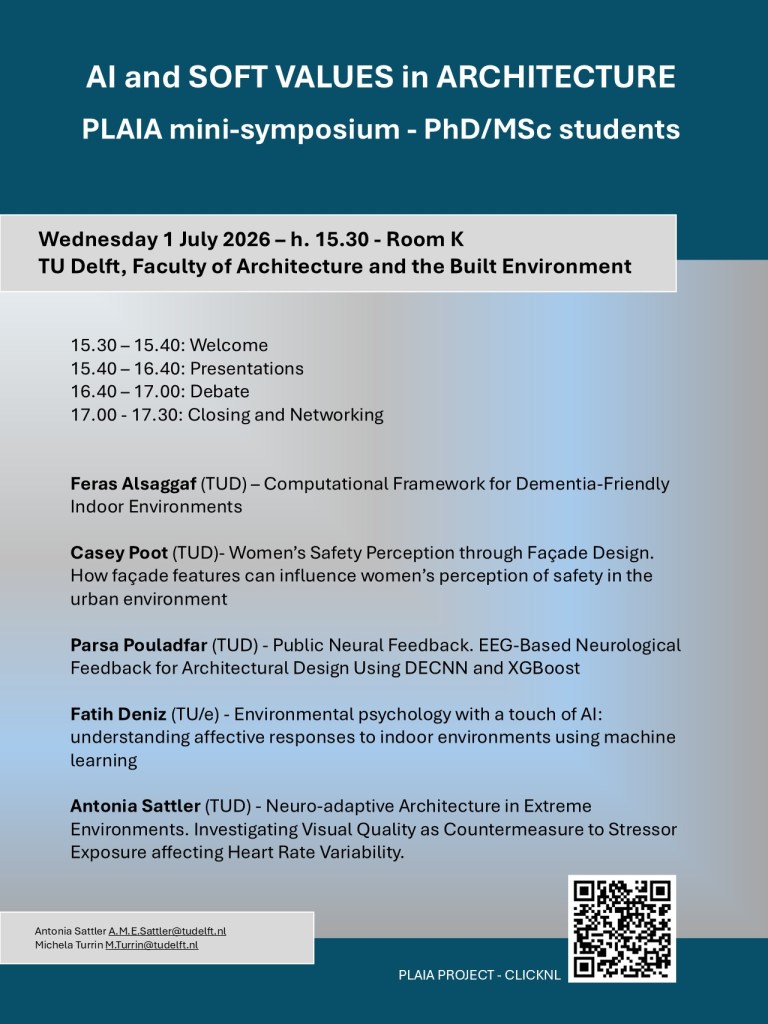
How can AI help an ageing population maintain autonomy and independence for longer? How can it improve our understanding of spatial cognition and navigation when cognitive functions are compromised? How can architecture and cognitive science be brought together to generate new knowledge, and what role can virtual reality play in this process? The PhD research of Feras Alsaggaf gave us a basis for exchanging ideas and discussing these important challenges.
How can virtual reality be used to investigate the influence of façade design on women’s perception of safety in urban environments? How can skin conductance (electrodermal activity, EDA) data help designers better understand how façade design affects human responses? Which design features have the greatest impact, and how can 3D digital models support the scientific investigation of these effects? These were among the topics we debated with Casey Poot.
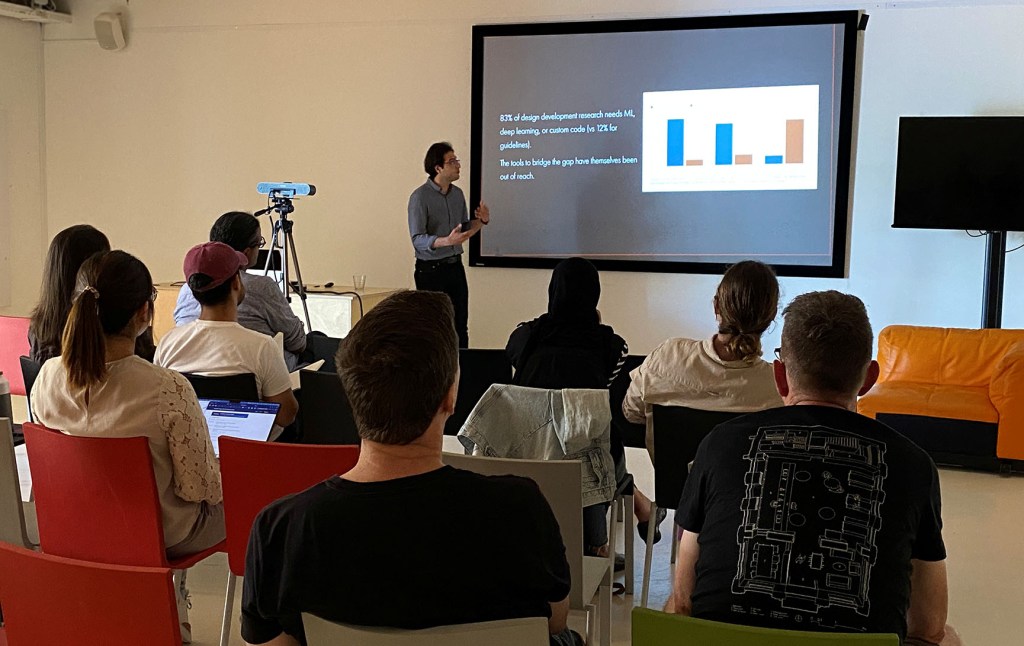
What datasets are needed to enable designers to better understand how users perceive architectural spaces? EEG datasets are valuable sources of information, yet they remain scarce and are often difficult to interpret. The information they contain is also not readily accessible or directly meaningful to designers. How can computational workflows make EEG-derived insights more understandable and actionable in design? Can we develop workflows that map relevant EEG information directly onto 3D digital building models? These were some of the questions we discussed today with Parsa Pouladfar.
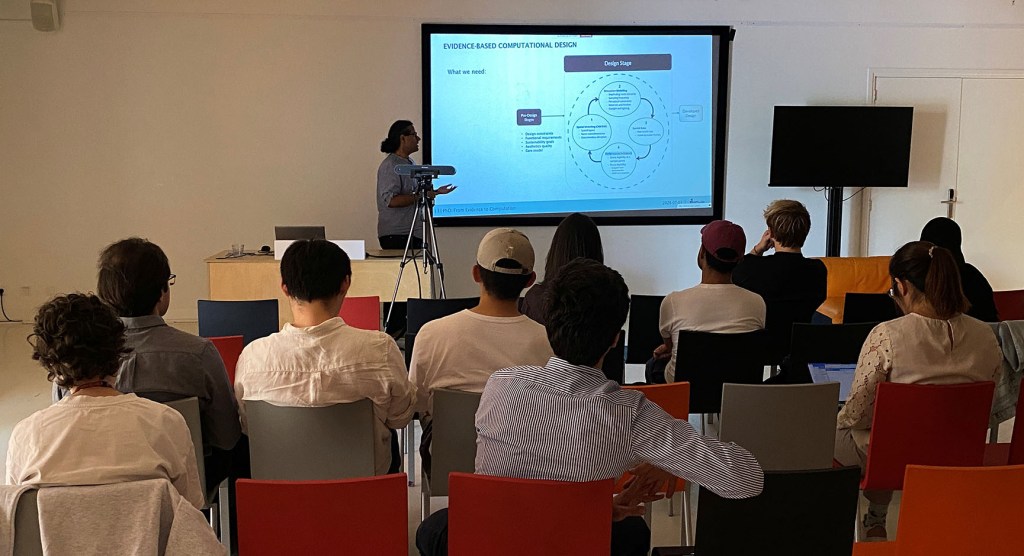
Different machine learning models offer different perspectives when analyzing architectural image datasets. How can we best combine their strengths to identify meaningful correlations, uncover causal relationships, and improve predictive capabilities? The PhD research of Fatih Deniz inspired an engaging discussion around these and other related questions.
What is the relationship between AI-driven, data-informed methods and the designer’s intuition? Where should the balance lie so that these technologies empower, rather than diminish, human intuitive creativity and input in the design process? How can computational tools enrich designers’ intuitive reasoning instead of replacing it? These and other questions stimulated discussions with and among architects from professional practice.
These PLAIA events are financed by ClickNL. Do you want to know more about the events? Would you like to participate in any? You can contact Michela Turrin (project lead) and Antonia Sattler (main researcher) at TU Delft.


Leave a Reply