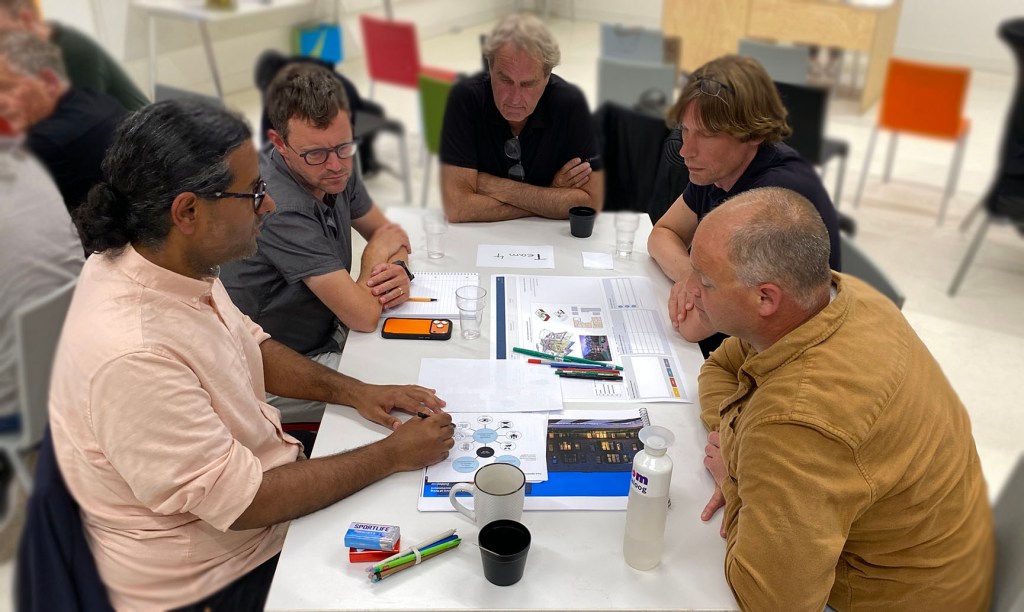
The key takeaways of a group discussion on Soft Values and AI for a neighborhood re-development plan in Amsterdam included thoughts on how we can measure soft values as a central open question. Three complementary methods were at the centre of the debate – Post-occupancy evaluation, Virtual Reality testing, and wayfinding simulations – where the group discussed if together they can enable actual and predicted responses.
PLAIA is organizing several activities among researchers and stakeholders, to shape a common ground and roadmap. A workshop series of 3 workshops is a pillar activity during 2026. During Workshop 1 – Mapping & Alignment (3rd of June 2026) – we mapped current practice and AI-methods using real-life projects from architectural practices, discussed knowledge gaps, and identified the tensions worth working on together. The workshop included 2 Sessions, where the first one focused on practice-to-method mapping. In this session, mixed tables of five to six worked in parallel. Architects presented a recent completed project where soft values mattered, using printed visuals; researchers and AI/cognitive science experts proposed computational methods that could have supported it. Each table documented its process on an A2 poster and marked which input came from which profession. The output mapped how soft-value & AI-method pairings feed into the framework PLAIA outlines.
In this Session, one group focused on Soft Values and AI for a a care centre in Amsterdam, the Zuidoever building.
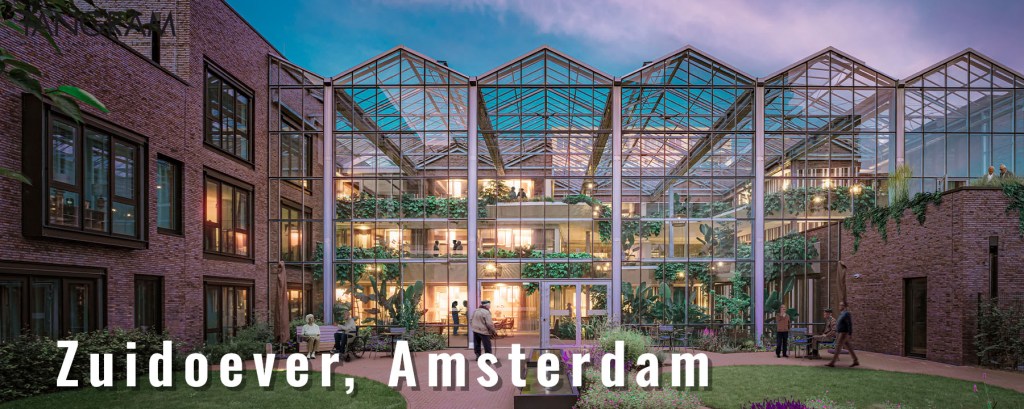
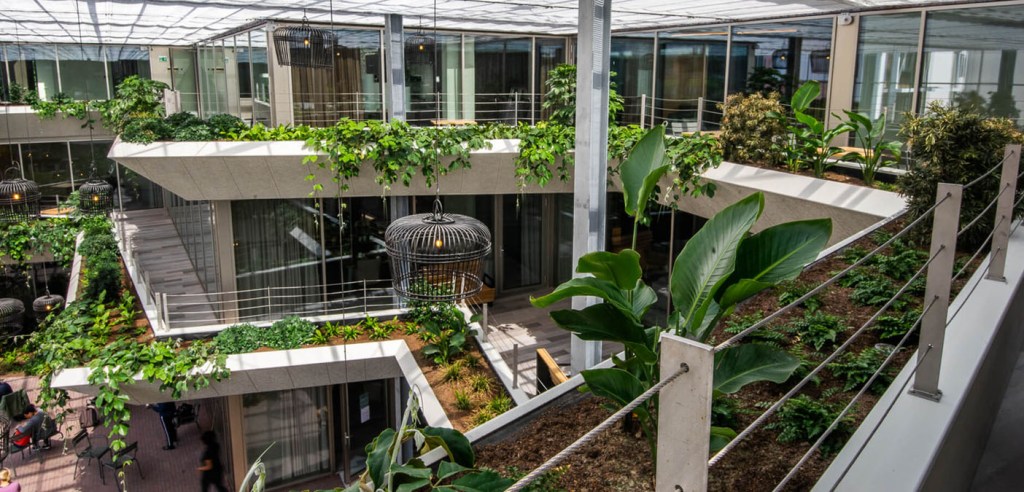
ZUIDOEVER CASE STUDY. The Zuidover care study was presented by TANGRAM. Context. A care centre in Amsterdam Zuid by TANGRAM for people with dementia and somatic diseases, housing a new care concept designed to promote independence and dignity and thereby reduce care demand. Independent apartments form a U around an inner garden usable nearly year-round, flanked by open kitchens, meeting spaces, and activity zones. Instead of corridors, meandering “interstitial” walking circuits let residents meet spontaneously. Colour, lighting, sightlines, tactile materials, and acoustic contrast (quiet near apartments, livelier in communal areas) guide movement and orientation – critical for residents with impaired spatial awareness. TANGRAM explained that three years on, the concept shows measurable benefits: improved resident and staff well-being, reduced care needs, medication use, and absenteeism, with gains in operational efficiency. The building aims also to depreciate favorably, since it can convert to independent apartments once its care function ends. Soft values at stake. Wide and over-encompassing; the group saw two main views to balance – the safety and well-being of residents, and of staff. Why these are challenging. A recurring theme was how to measure a design goal or soft value. The subjectivity and preferences of individuals were noted as something that must be taken into account.
Methods discussed. Post-occupancy evaluation (POE), virtual reality testing, and wayfinding simulations, treated as a sequence: POE gives information on actual responses to the built environment, VR gives responses to design proposals, and spatial analysis/wayfinding simulation predicts outcomes with AI. AI and computation. A clear distinction was drawn between hard/compliance checks (e.g. daylight provision, area requirements) and soft/experiential qualities (social activation, familiarity, wayfinding). Key takeaways. Measuring soft values is the central open question. Three complementary methods – POE, VR testing, and wayfinding simulation – together span actual, proposed, and predicted responses.
These workshops are financed by ClickNL. The results of these workshops are part of the PLAIA project. Do you want to know more about the results? Would you like to participate in these workshops? You can contact Michela Turrin (project lead) and Antonia Sattler (main researcher) at TU Delft.


Leave a Reply