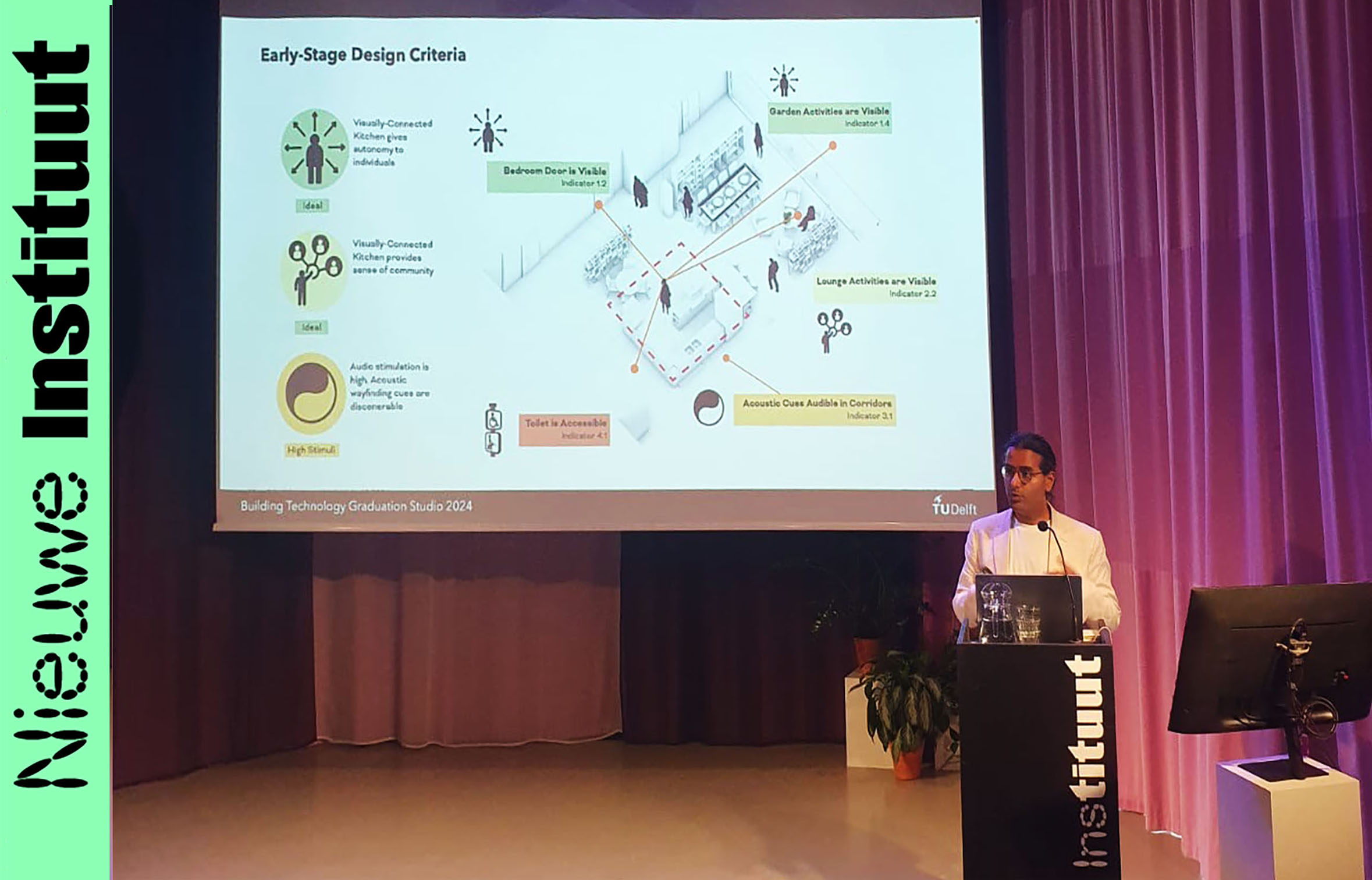
Feras presented his thesis at the NAI. The presentation showcased an innovative intersection of healthcare, architecture, and computational design aimed at improving quality of life for vulnerable individuals. In his thesis, Feras explored the potential of artificial intelligence to support the design of dementia-friendly residential care environments. The research focused on how architectural layouts influence…
Feras presented his thesis at the NAI. The presentation showcased an innovative intersection of healthcare, architecture, and computational design aimed at improving quality of life for vulnerable individuals.
In his thesis, Feras explored the potential of artificial intelligence to support the design of dementia-friendly residential care environments. The research focused on how architectural layouts influence wayfinding and wellbeing for people living with dementia, emphasizing the importance of autonomy, visual access, and social integration within care facilities. By combining spatial analysis methods with machine learning techniques, the thesis demonstrated how AI can assist architects in evaluating floor plan designs during the early stages of the design process. Using a dataset of 256 floor plans and supervised learning models, the study achieved promising prediction of wayfinding quality, highlighting the growing role of AI as a decision-support tool for human-centered architectural design.


Leave a comment